
Before leaving for Ukraine, people commonly asked me whether I wasn’t afraid of being killed. The short answer was no. The longer answer included statements like I’m no more afraid of dying now than I am everyday and have been since I was nine years old and my father died of a heart attack. The longest answer meant explaining that if I do die I can think of no better way to go. I’ll be sharing my art, which I’ve devoted my life to, putting it at the service of people who welcome it. Dying while being of service and on mission? Death doesn’t come any better than that.
Death of course is everywhere in Ukraine. You will encounter the faces of the fallen every time you go to the store, go out to eat, take a walk, or head to a film screening.
Some memorials are built and paid for by the government, whether local, provincial, or federal. Others are makeshift, products of an outpouring of grief from a population not too busy defending their own lives to honor others’.
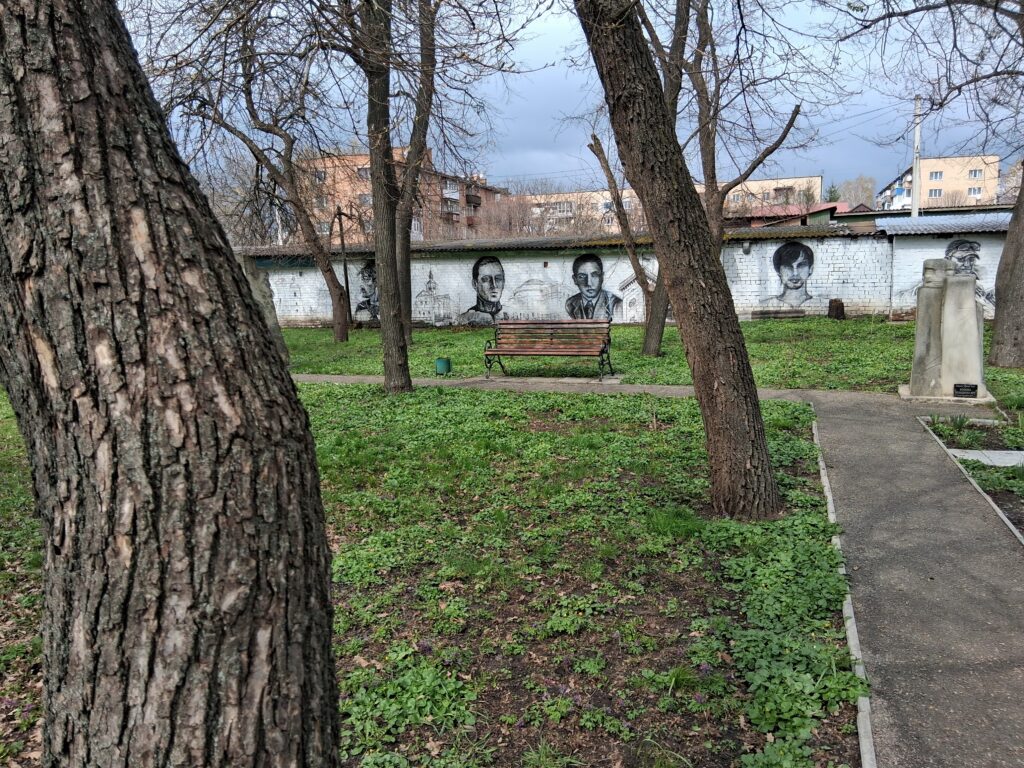
Locals killed from Kamienka, featured on the garden wall behind the town museum.
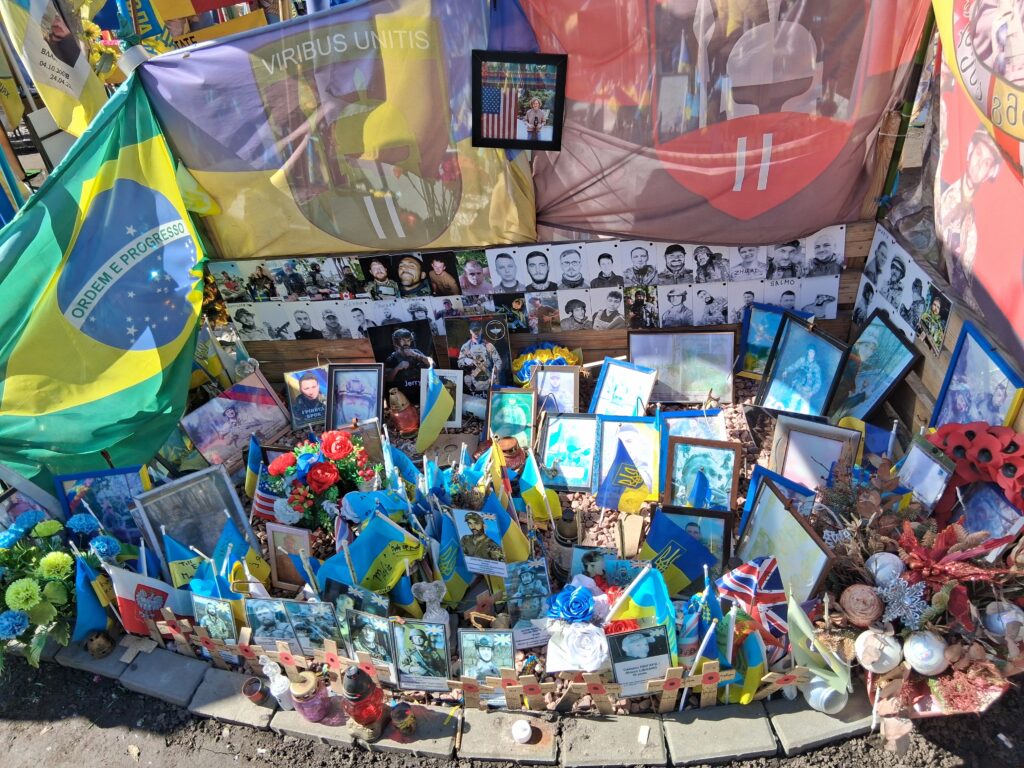
Some of the estimated 120+ Americans (along with other foreigners) who gave up their lives in defense of Ukraine.
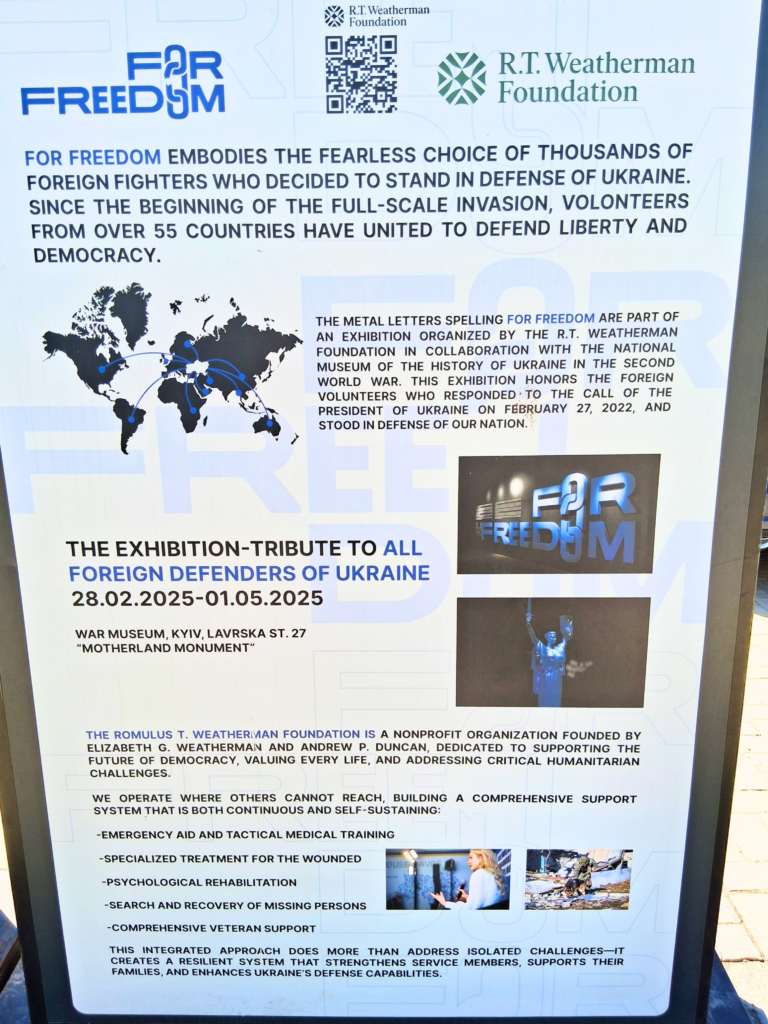
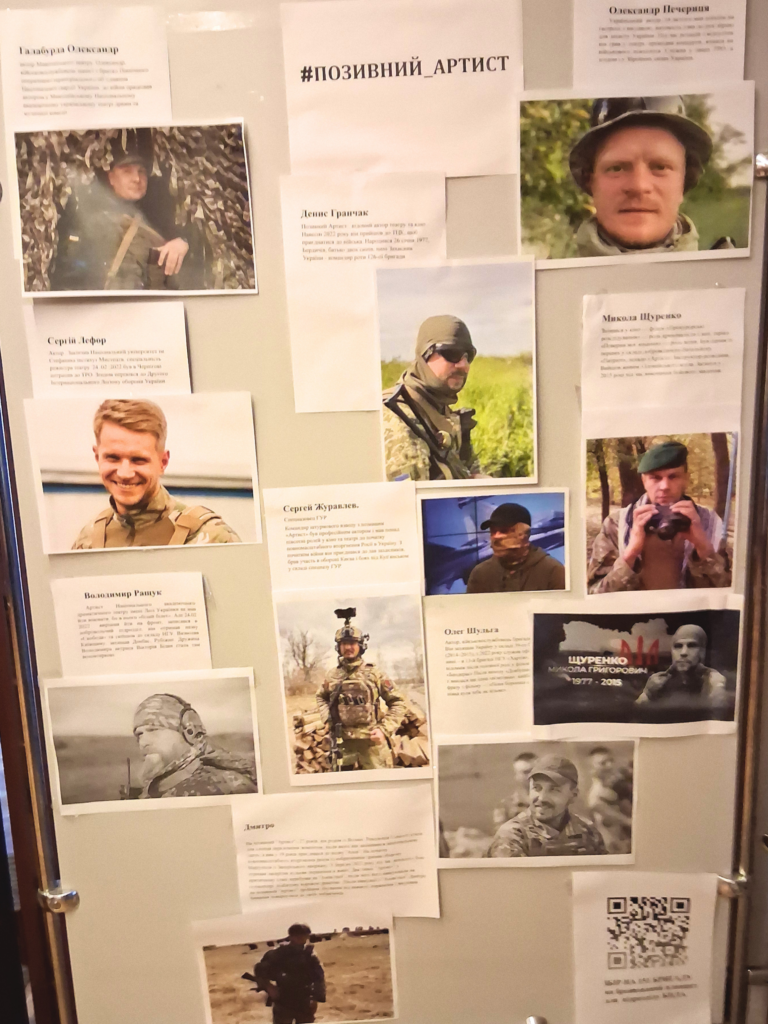
Some of the artists who served (and many who died), memorialized in Kyiv’s House of Cinema.
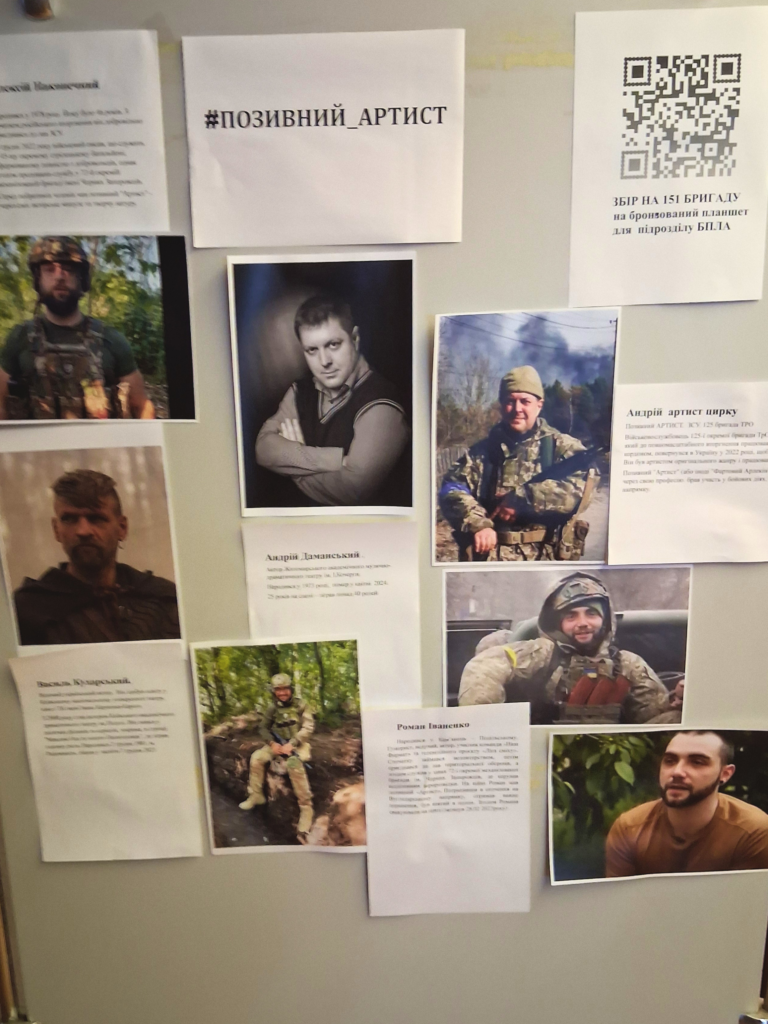
More artists who served (and many who died), memorialized in Kyiv’s House of Cinema.
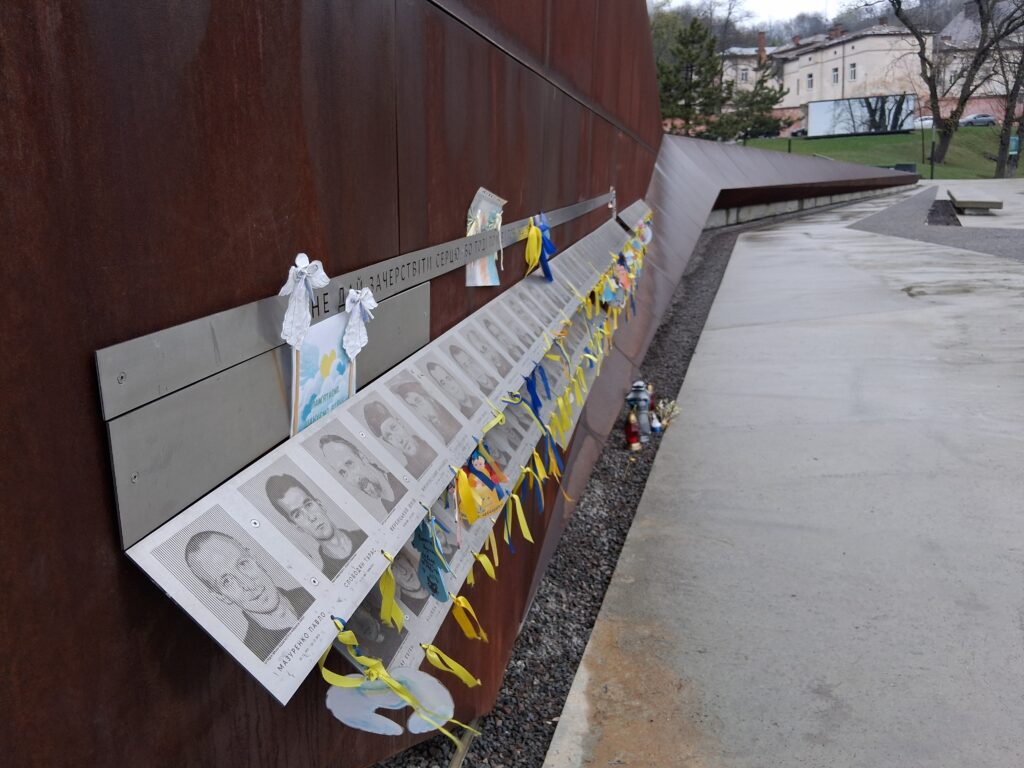
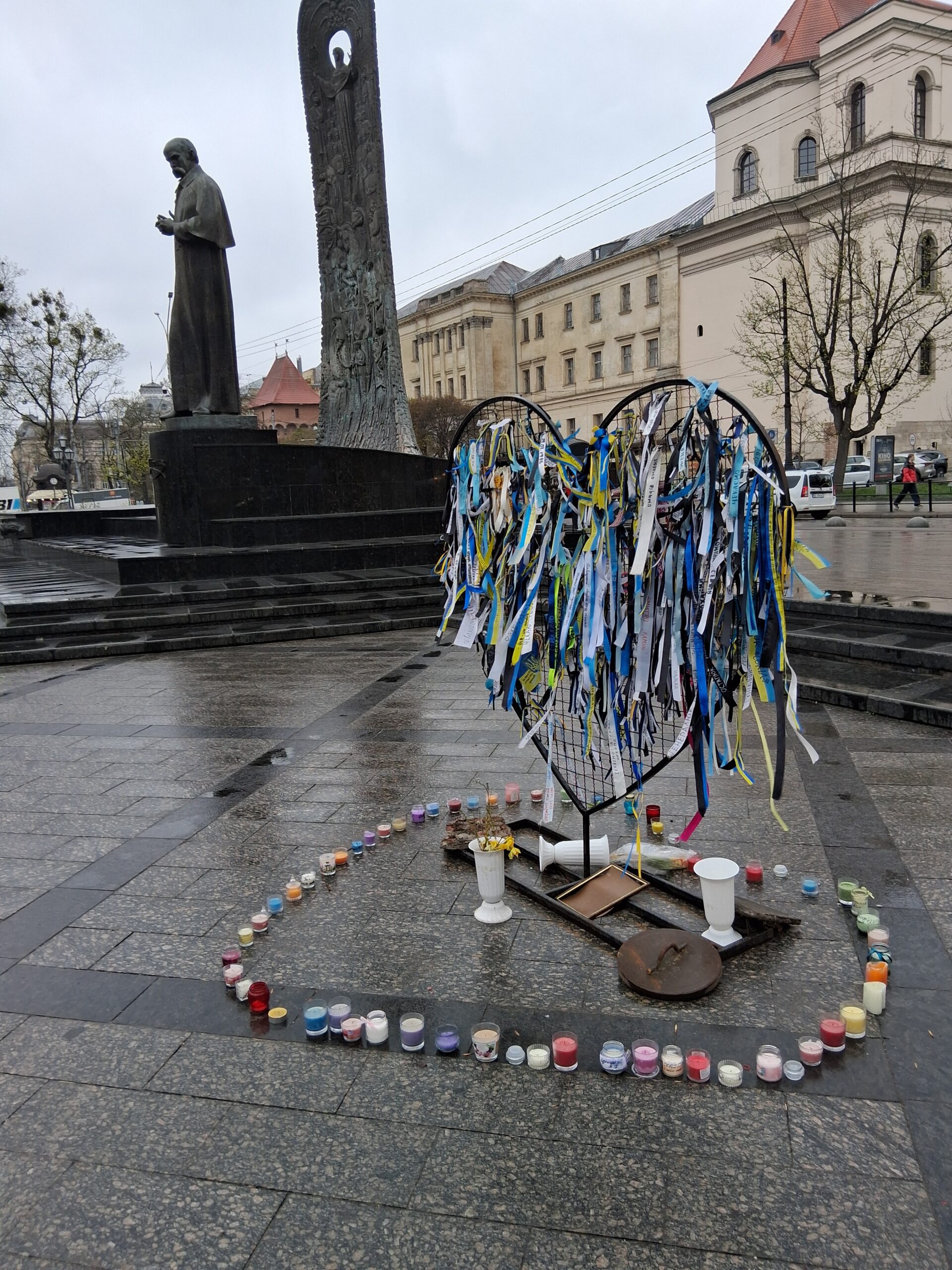
Near downtown Lviv
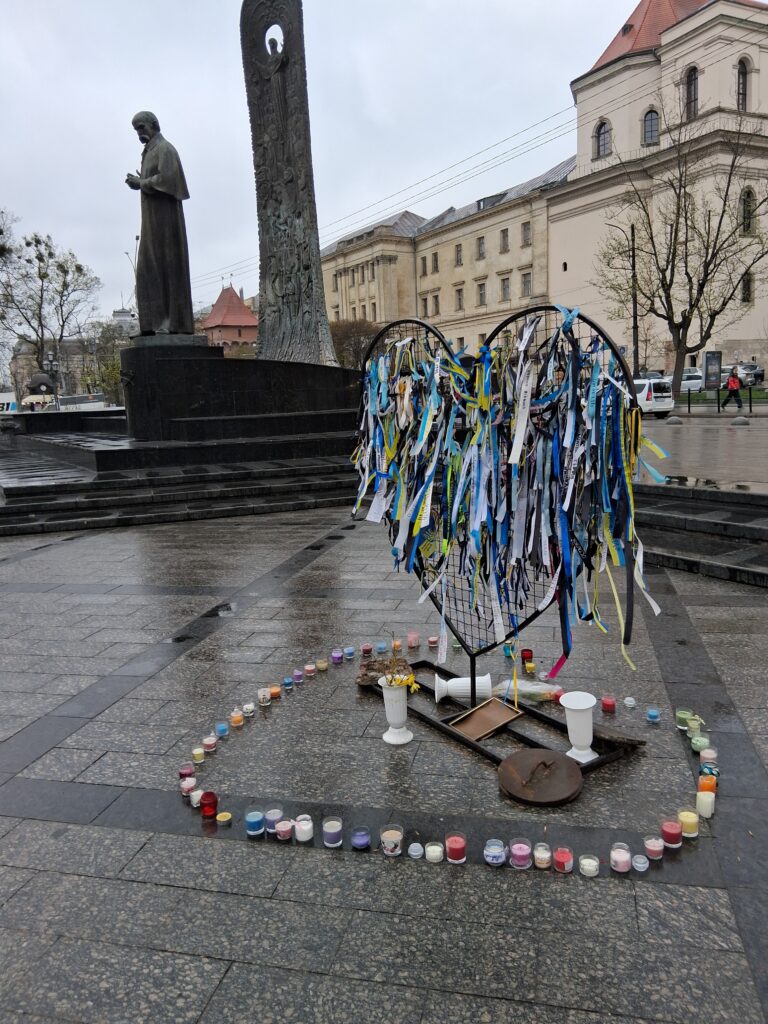
Makeshift memorial, downtown Lviv.
One of the great responsibilities we carry in this lifetime is honoring the memory of the dead. We all stand on the shoulders of our grandfathers and grandmothers. It’s impossible to calculate how much we owe those ancestors who too often gave everything to insure a better life for us—the commitment, the self-sacrifice and devotion to future generations. The lives we lead today are in many ways products of the dreams they had for our lives. The cultural practices they leave for us are their bequest too. Mentorship, rites of passage, values, rituals, myths and stories, morals and ethics…this is the inheritance they left for us to enrich our human birthright. Our task is to recognize and honor these gifts, perhaps tweaking the practices slightly before blessing them on their way, furthering their advance through time. Soon enough we’ll be the next dead ancestors that, with luck, our descendents will honor and remember.
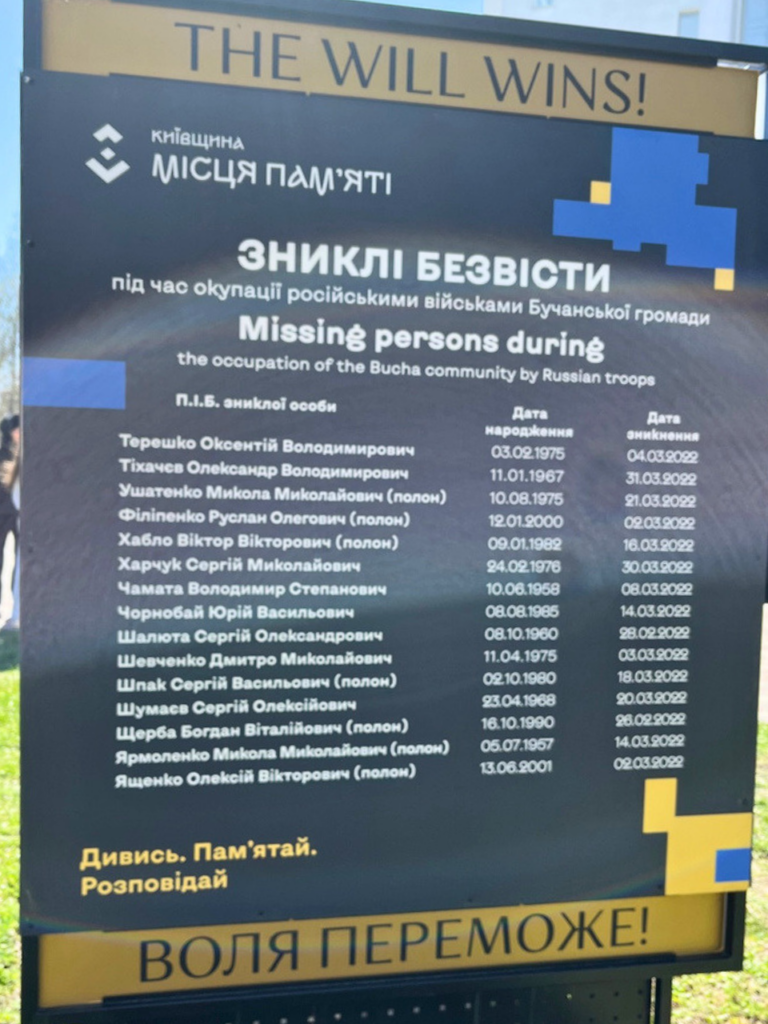
Bucha Civilians MIA.
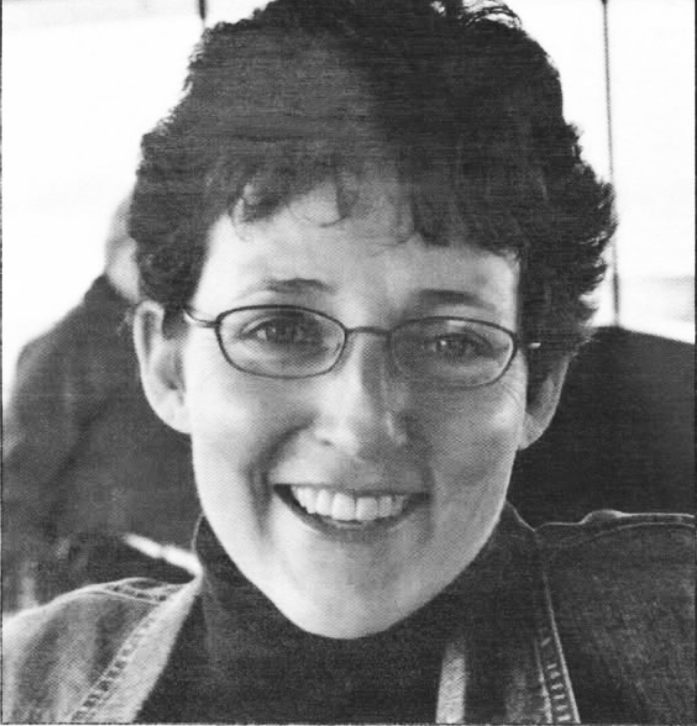
This is certainly true for all the memories of the dead I personally carry. Not only my parents and close relatives, but 40-50 friends, many soul mates, throughout the entirety of my life. The burn from this far from eternal flame is greater now because of my late wife’s death. Gone at 59, she cherished life more than most. I do my best to honor her every day – to be of service, to be creative, to delight in this living – as I know she would. And I steadily aim to live up to the standard of evolved masculinity she held out for me.
The U.S. would do well to learn from Ukraine’s example. But that would mean tearing down the imperial fortress of two great denials. The first is “We’re not at war.” I’ve seen variations on this great wall of denial play out for 50 years since Vietnam. Who even commemorates the recently ended Afghanistan war? Who even knows it was the longest war in American history? The first Iraq war is largely forgotten; the second will soon follow. Who remembers Lebanon (1982-1984)? Grenada (1983)? Libya (1986)? Panama (1989)? Somalia, Haiti, Bosnia? Yemen and Syria? And now we have Venezuela and Iran. The demands of the empire insist on paying scarce respect to the demands of the grieving. As Noam Chomsky pointed out, it really doesn’t matter how much the rest of the world knows and cares about these wars as long as Americans remain clueless, deep in the shadows, steeped in denial.
The bigger denial may be the fact of death itself. Does it even need to be said anymore? Americans know they’re going to die but still act like it’s a bad rumor. Death and dying are swept out of public view into homes for seniors, intensive care units, hospice centers, funeral parlors, and crematoriums. Aside from soldiers on the battlefield and first responders, for an American to witness another human being die borders on the miraculous.
Ukraine can’t afford this luxury. Denial is not possible. That is actually good news. They recognize and honor the estimated 115,000-200,000 souls who made the greatest sacrifice, giving everything. Counting all the wounded and missing, total casualties now are estimated to be 600,000-700,000. Civilian deaths total over 15,000. That’s a lot of death and dying for a nation of only 40 million. Brothers, fathers, daughters and grandmothers, no one is untouched and unscarred. The fact that this grieving goes on in public, never hidden from view, never whispered in shame or secret, never pretended not to happen, is a hard reality very much to be acknowledged and honored, even celebrated. They model what could prove a healthy norm for Americans to follow.
So I do. I celebrate Ukraine, standing tall in a lonely and forgotten war. Not running away, not turning away. Refusing to be a pawn in some greater game, bending with full heart and attention to the realities at hand: the horror and pain, the injustice and indifference, the isolation.
I do not turn away. I will not forget.
Long live Ukraine!
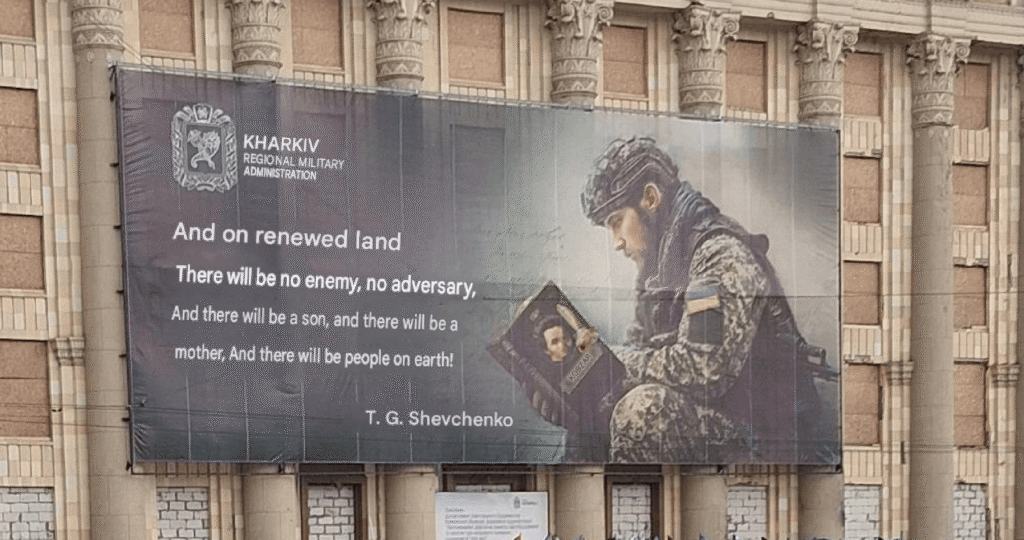
Giant banner over a bombed out government building in downtown Kharkiv. From a poem by Ukrainian TG Schevchenko, translated into English.
To subscribe and receive all our blogs, film giveaways, public talks, and more, click here.