
In a strange and wholly unforeseeable way, my recent trip to Ukraine really started in Spring 2022. I was so incensed at Russia’s full-scale invasion that I sat down and wrote an essay ruminating on the role of citizens living in a nation under attack. “Reflections on the Warrior Archetype in the Age of Neo-Feudalism” begins with these words (with later paragraphs excerpted):
“I’ve spent many years reflecting on the meaning of the Warrior Archetype. It’s no coincidence that my company is named Warrior Films.
My friend Christa Lörcher was shocked and appalled in 2001 when she discovered I had given my company that name. As a lifelong pacifist, she attained notoriety in 2002 when she was the lone person in the German Bundestag to vote no to her government’s otherwise universal endorsement of military intervention in Afghanistan. For her the term Warrior encompassed all that was abhorrent about her country’s militaristic history. I have lifelong respect for that principled stand.
Russia’s invasion of Ukraine got me reflecting again on the history of warfare. Who are the Warriors? The Russian soldiers fulfilling their service commitment to their country, required of all men aged 18-27? What about the Ukrainian soldiers and civilians defending their country and homes? What is the responsibility these men have, especially the volunteers, to their loved ones, families, and communities in times of physical danger?
…In the Spring of 2022, thousands of Ukrainian expats made their way home to take up arms against Russia, as did volunteers from many countries around the world. I found that admirable. In fact, I found myself inexplicably called to do the same. Perhaps because my mother’s family came from there, and were subject for years to forced conscription into the Czar’s Russian army. (You were typically given two choices. “Come with us now and join the army or we’ll shoot you.”) But let’s not forget that Jews were also regularly subjected to pogroms from Christian locals. So my pull was at least partly counter-intuitive. Either way, not being a trained soldier and not speaking Ukrainian made this a mere fantasy on my part.
…So if I were a Ukrainian citizen right now I wouldn’t sit idly by, waiting for bombs to drop on me. I remember that the greatest way to alleviate fear is to act. If I didn’t have a family or others dependent on me, needing me to escort them to safety, I would take up arms and do my best to kill Russians before they killed me.”
That was the penultimate point I made. Recently, I added this postscript:
“But I don’t have to. In fact, four years after first completing and publishing this essay as a blog, I got to go to Ukraine and serve in a different way. In April 2026, I arranged to tour five cities with my Veterans Journey Home film series, some, like Kharkiv, Dnipro, and Odesa, painfully close to the front lines. While missiles fell and drones exploded, we screened the films primarily for psychologists and social workers. But dignitaries, public officials and students also attended, along with Veterans and active duty soldiers and their families. 140 people participated in one Kyiv screening, hosted by the Deputy Head of the Kyiv City State Administration. The films did their job opening hearts while I got to open minds, speaking to the non-medicalized, non-pathologizing ways average citizens need to learn how to receive Veterans with meaningful rituals of welcome. The outpouring of love and respect I received in return nearly overwhelmed me. Ably, with utmost gratitude, in ways thoroughly unpredictable at the time, I fulfilled the wish of service I made in 2022 when Russia’s full-scale invasion began.”
I did my best to tease out some simple takeaways for the audience:
- Ukrainian Veterans have advantages American Vets don’t:
- They’re fighting with clear, noble purpose: to protect their families, homes, country, and freedom.
- They’re supported by a civilian population that is not in denial about the war.
- Since that civilian population is also under direct attack, civilians share much common ground with soldiers, not least of which may be PTS and Moral Injury.
- At the same time, Ukrainian Veterans share challenges that are probably universal:
- Forging a new identity, a new sense of purpose, a new mission of service.
- Overcoming distrust of civilian society too often concerned only with consumer goods and daily trivialities.
- Hanging on to the precious sense of “tribe” formed with their Veteran comrades while also finding their way into the “tribe” of civilian communities. Finding new belonging.
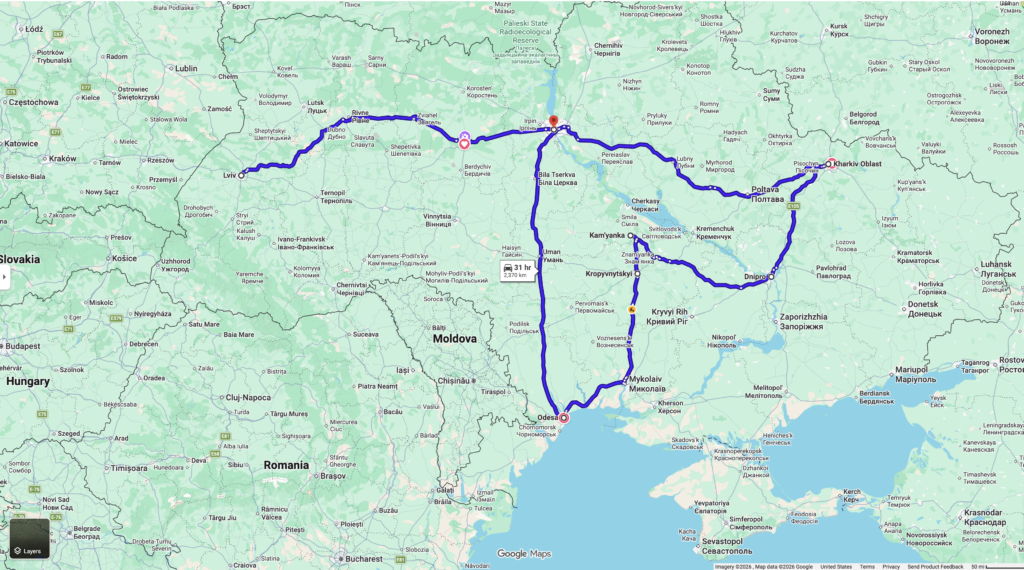 From Lviv to Kyiv, Kharkiv to Dnipro, audiences gathered to watch Veterans Journey Home. Some screenings attracted dozens. Others were smaller. But attendance numbers became irrelevant.
What mattered was what happened after the films ended. Again and again, people stayed on, wanting more. Most discussions lasted longer than the films themselves. Nobody wanted to leave.
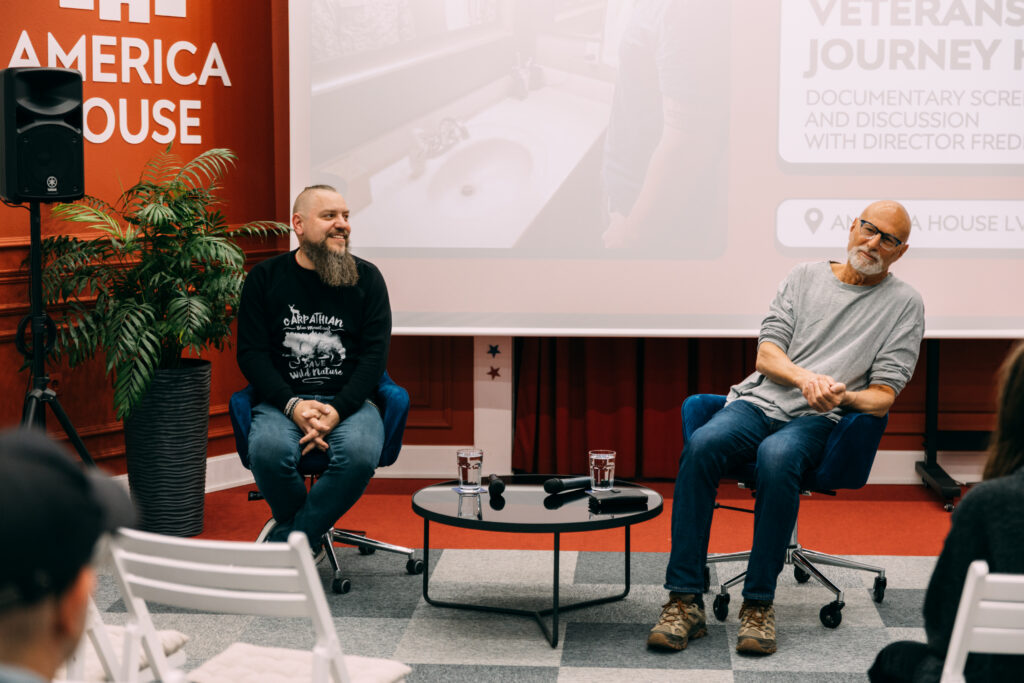
With my Vet co-host, Andrej, Deputy Mayor of Veterans Affairs for Lviv.
What struck me was that the questions never once centered on filmmaking. No one was interested in how, as a non-Vet, I worked with Vets; how I gained permission to film certain scenes; how the filming itself impacted the stories. Instead, they focused on the issues foremost on their minds: How do we help Veterans come home?
Ukraine is still fighting for its survival. Every day brings new headlines about military operations, missile attacks, and territorial battles. Yet despite the realities of war, many Ukrainians are already looking ahead. They are asking what happens when hundreds of thousands of Veterans return to civilian life.
I expected openness to the ideas I shared. I expected resilience to the war. I expected courage and determination.
What I did not expect was the depth of emotional openness I found.
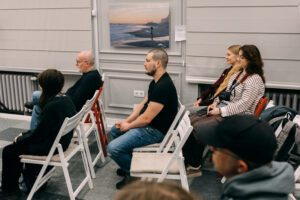
the woman with the dark hair asked about her brother
At a screening in Lviv, one young woman, nearly in tears, said she now understood her Vet brother much better. She asked for detailed advice on how to provide a meaningful ritual of return for him.
I told her she didn’t have to get him into some formal event. I said, start by enlisting friends and family. Sit down together in a place he feels safe and at ease – your living room, a place out in nature… Then tell him something like this:
“We love you. We’re here for you. We want to support your full reintegration into civilian life. We recognize that you are not the same man who went off to war. You are changed, probably forever. We understand this. We still love and accept you. We will do our best not to foist on you any expectations of the man you used to be. All we want to do is learn to know who that new man is.
You may not know yourself yet. But that journey towards knowing starts with telling us your wartime experiences. All the loss, terror, grief, shock and betrayals, along with all the good times – the bonding, laughter, and love. We want to hear it all. We will listen without judgment. This was wartime. You did what you had to do, what you were ordered to do. All we want is to hold those experiences with you so you don’t have to hold them alone. Will you honor us with that?
If so, we’ll shut up and listen. Just know that anything you share is welcome. We promise to hold it all with love in our hearts.”
Though I gave her my card, I never heard how things went.
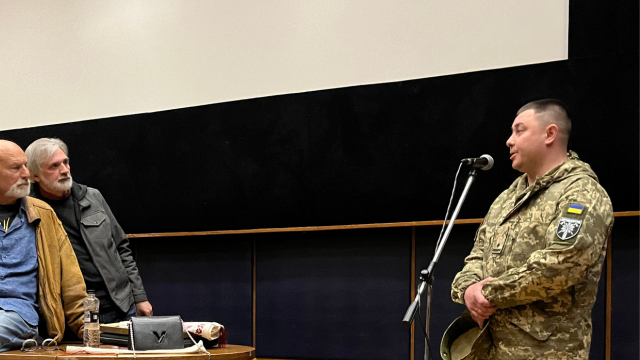
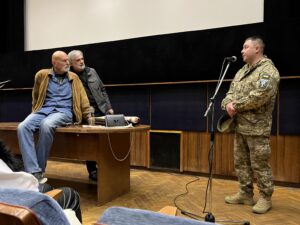 At the House of Cinema, a soldier got up from his seat and walked to the front of the room to speak openly about his fourteen years of military service. He described struggles similar to those faced by Kalani in “Kalani’s Story.” The depth of his sharing transformed the room. We listened, awed into silence. Then he tore a chevron patch off his uniform and handed it to me.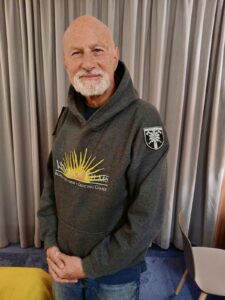
Three days later, at a conference for Kyiv psychologists, a different Veteran made a similar long walk from the back of the hall to the microphone to describe spending a full year isolated in his home after returning from service. He didn’t see anyone and no one came to see him. He felt abandoned by society, and unsafe among civilians. The pain poured out of him to 140 witnesses. Though his expressions of deep gratitude for the film were directed to me, his gratitude was really a measure of respect for the audience. Perhaps for the first time in his life he was compassionately witnessed and held by fellow citizens, to speak aloud what for so long he carried alone. 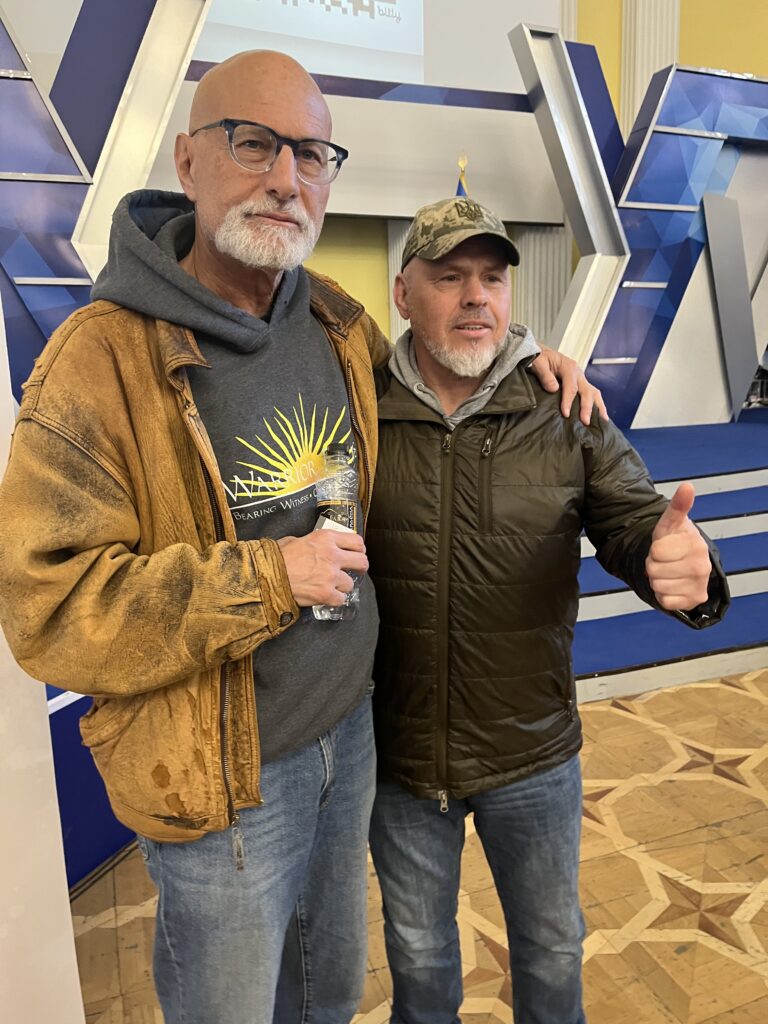
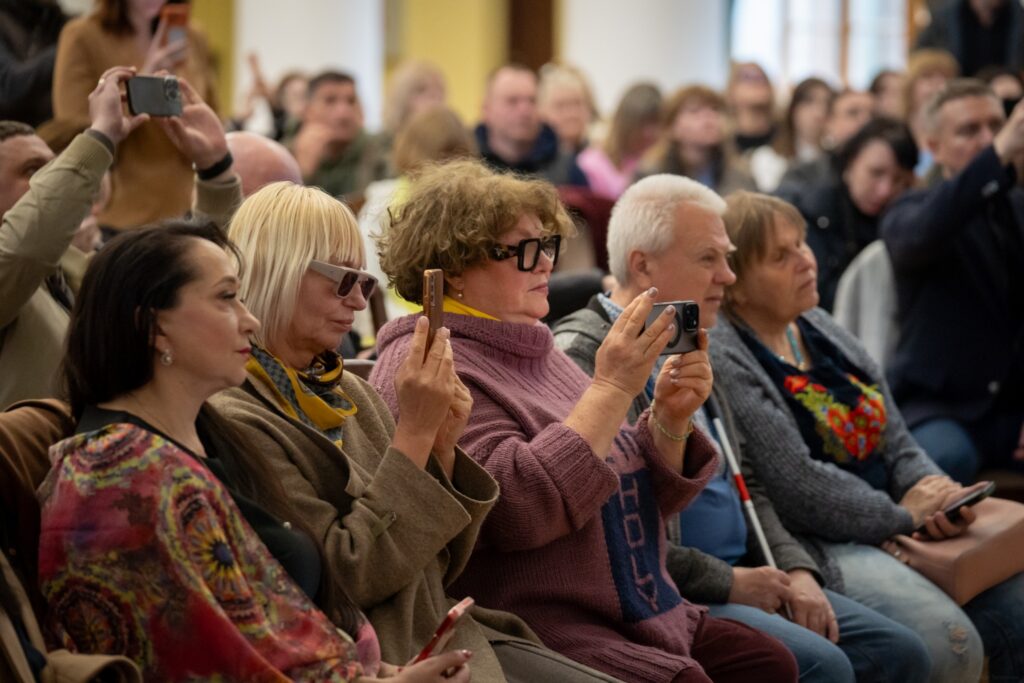 When he left the stage, I told the audience they just experienced one prime example of exactly what needs to be repeated throughout society by tens of thousands.
Psychologists, social workers, educators, public officials, and family members all raised the same concern. How can Ukrainian society prepare itself?
The question is urgent.
 The scale of Ukraine’s Veteran population, though small compared to Americans’, is large and growing. Every city I visited already has large Veteran communities. The “Unbroken” Center in Lviv services not only the 10,000 Vets resident in the city, but those from all over Ukraine – with 800 beds. Government officials spoke of rehabilitation centers needing to serve thousands. Programs are being developed and support networks are emerging. Yet many Ukrainians recognize that the challenge ahead extends far beyond anything the medical system can handle.
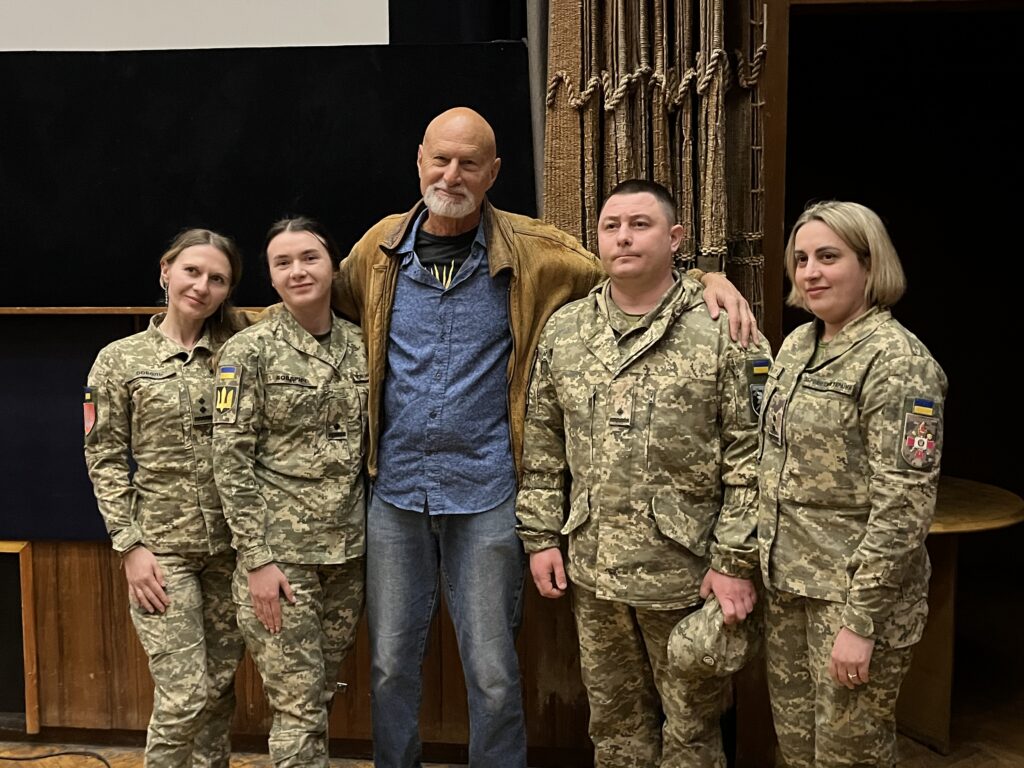
With soldiers following Kyiv’s House of Cinema screening.
The deeper challenge is cultural.
Can a whole society learn a new way of listening?
Can communities learn how to welcome people home from experiences most civilians will never fully comprehend?
Can Veterans feel seen, valued, and understood without being unreasonably expected to become who they were before the war?
These questions surfaced everywhere. Though I’m losing faith in Americans, I have faith that Ukrainians can answer yes. I experienced an earnest willingness on the part of ordinary Ukrainians to engage Veterans.
At multiple screenings, audience members shared personal stories with extraordinary vulnerability. Many spoke about the challenges they’re already having with family members currently serving. In Dnipro, someone brought up Afghanistan Vets. I had totally forgotten about them. In the 1980s, almost 25% of the Soviet forces were Ukrainian soldiers, numbering 160,000. That nine year war, ending in 1989, left thousands of those Veterans lost, unable to psychically and emotionally return to civilian life. That Dnipro woman detailed the horror she faced growing up with a father shattered by his Afghanistan service.
There was no resistance during any of these conversations. No filters, no defense mechanisms. Instead, there was deep curiosity, unguarded openness, and a thirst to share.
It was a very good sign. The burden of reintegration cannot rest solely on Veterans. Communities must participate. Families must participate. Friends, neighbors, teachers, employers, and civic leaders must participate.
Healing becomes possible when emotional pain is witnessed, responsibility is shared, when civilians and Veterans meet halfway on the bridge of return and everyone gets vulnerable. That allows for the rucksacks of pain soldiers carry to be taken off, hoisted and shared on the backs of the collective. What gave me hope was seeing how many people already understand this.
Despite the enormous pressures of the ongoing war, Ukrainians are already asking the right questions and doing the right things. While preparing to welcome their warriors home, they’re grappling now with the quality of that return.
Ultimately, that may prove just as important as winning the war.
[For the next blog in the Ukraine series, click here.]
To subscribe and receive all our blogs, film giveaways, public talks, and more, click here.
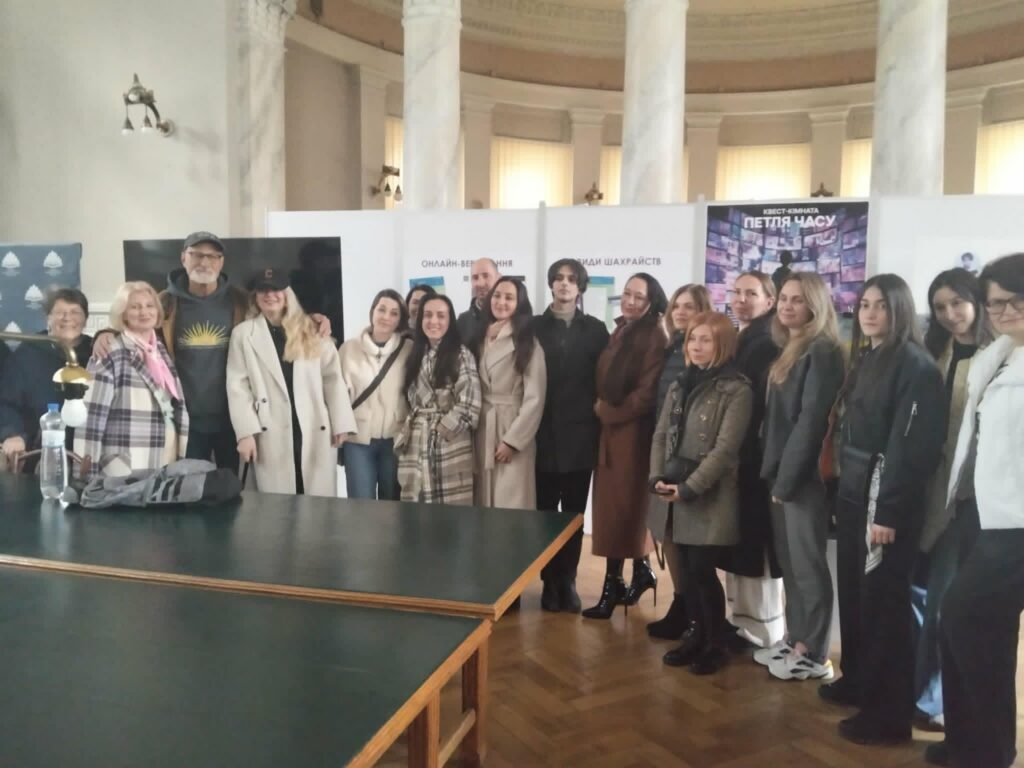
Odesa
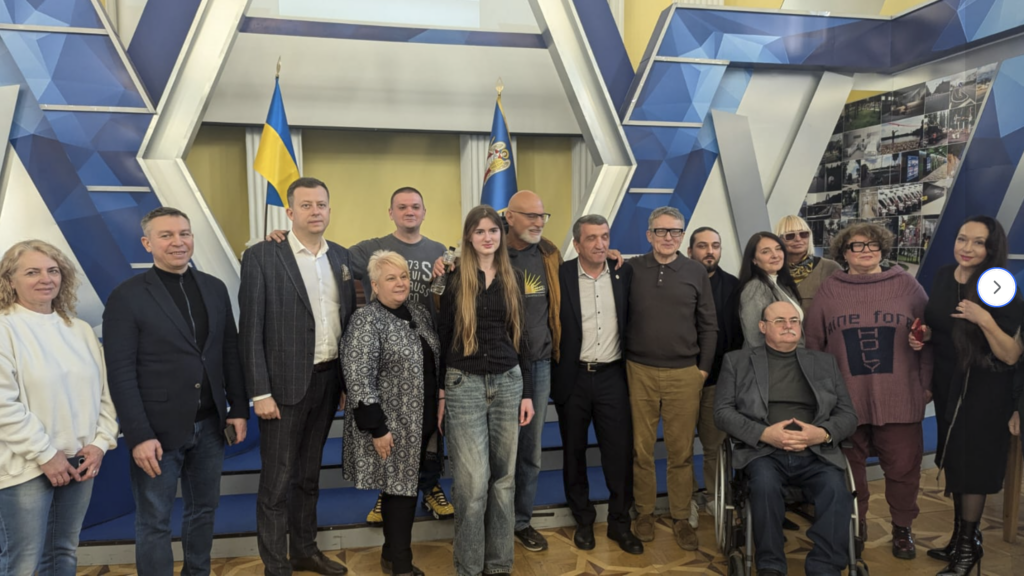
Kyiv