

Editor’s Note: The Russians celebrated Memorial Day by deluging Kyiv and surrounding cities with hypersonic ballistic missiles and suicide drones, killing 4 civilians and wounding over 100, continuing their plan to erase Ukrainian culture by targeting schools, historic buildings, and the National Art Museum.

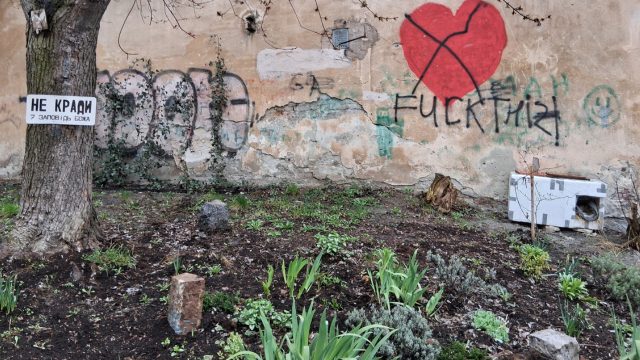
Graffiti on a wall in Liviv
At hotel check-in, my first day in Ukraine, in Lviv, I asked the clerk what to do in the wake of a bomb alert. She explained the procedure to head down immediately to the basement. The security guard would open the unmarked doorway and direct people there. Then I asked what about when I’m on the street. Head to the nearest subway? She said Lviv has no subways. “So what do I do?” She thought for a moment and then suggested “Just do what everyone else is doing.” Seemed like reasonable advice until it became clear that nobody gets particularly concerned and does much of anything.
One of the strangest realizations during my time in Ukraine was how quickly the extraordinary becomes ordinary.
Not 5 minutes after I entered my hotel room, the air raid sirens sounded. I rushed down the stairs expecting urgency, if not panic. The same security guard who just dropped my bags led the way to the basement. The room was cold but not exactly poorly appointed. It was the hotel conference room, complete with wet bar and WC. Since I didn’t bring my jacket, the guard kindly brought me a blanket. It was midnight and I knew there were other people in the hotel. Where were they? What about the desk clerks? After sitting alone for half an hour, I realized no one else was coming and went back to my room. Only then did I remember why I seemed to be alone on the top floor.
Before leaving on my trip, my Ukrainian friend Lana told me that no matter what I have to go to the bomb shelters when I hear the warnings. She also said never ever stay on the top floors.
She didn’t account for me liking my room so much I decided to stay anyway.
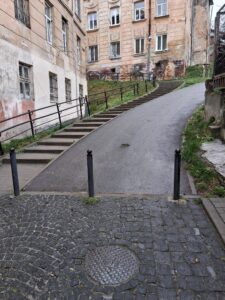
On the way to the high castle park
Walking in the high castle park the next afternoon the air raid sirens went off again. At first, I wasn’t too concerned. I thought, ”Hell, I’m in a park. They’re not going to bomb a park.” Then I thought, “Well, shit, bombs travel off course all the time; you never know.” Then I realized the top of the hill would actually make a very good target. Some giant communication tower rises from the peak and who knows what else is up there. The security value of the area was confirmed minutes earlier when I made it to the top only to be greeted by a soldier with a machine gun yelling at me to get lost. Fortunately, the two snarling pit bulls that came for me with intent to kill were on strong chains that stopped 15 feet short.
I looked around and observed. Who’s responding to the sirens? One guy walking his dog on the next hill over seemed unconcerned. The same with two women walking toward me. I wanted to ask them “where do we go?” They seemed so nonchalant I thought the hell with it. The message that nobody is concerned was reinforced moments later when a jogger came huffing up the hill. “OK, they don’t care; I won’t either.”
Not because the danger disappeared, but because daily life has to continue.
That may be one of the defining psychological realities of modern Ukraine. Human beings can normalize almost anything.
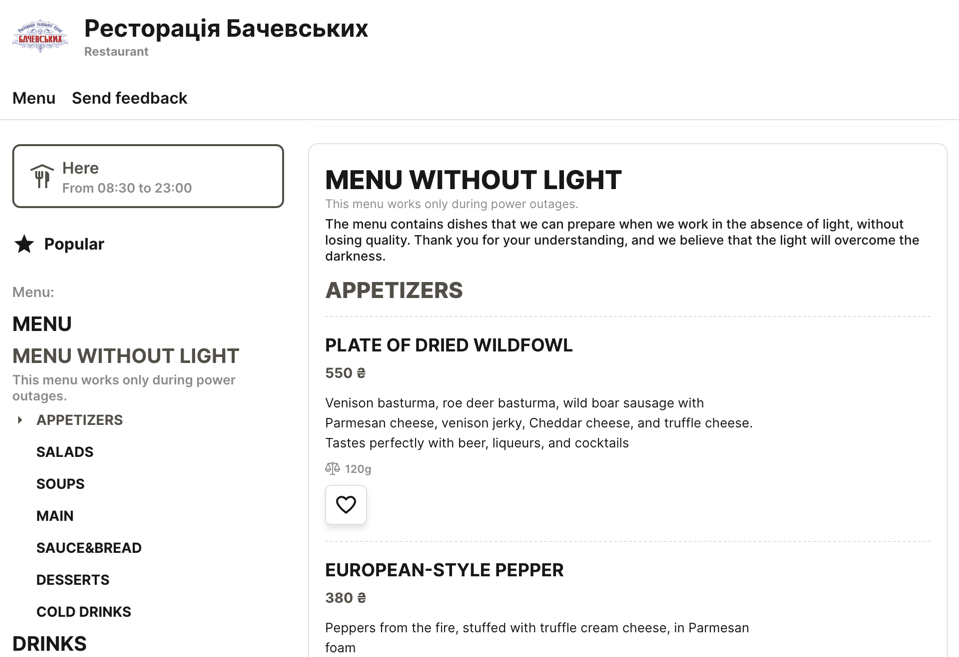
An alternate menu in a famous Lviv restaurant
-
The young entrepreneur on the train who gifted me his cap after we shared a deeply philosophical conversation about life and war.
- The veterans who stayed after screenings, emotional but composed, trying to explain the experiences they had that resist being put into language.
- The young filmmaking student who tearfully asked me how to remain an artist without falling into despair.
- The librarians, translators, psychologists, volunteers, journalists, and ordinary citizens all trying, in their own imperfect ways, to hold society together.
What struck me repeatedly was that Ukrainians are thoroughly uninterested in self-pity. Exhaustion, yes. Frustration, absolutely. Cynicism toward government promises, certainly. But beneath all of it is resilience bordering on stubbornness. A purposeful and empathetic denial.
Even humor survives.

From a resort hotel outside Dnipro. Note the different sized bags for the different sized poops.
At lunch one day the couple at the next table felt certain I was Patrick Stewart. I told my translator in the future to just say “Yep, it’s him.”
Following a Kyiv screening, in a different case of mistaken identity, a young woman happened upon appreciative fans taking selfies with me in the hallway. In between photos she grabbed me, blurting desperate nonsense about her artistic life and career dreams. She clearly thought I was some star who could whisk her away on a flying carpet to Hollywood. Gently but firmly, I repeatedly sent her away. In one final desperate lunge for my magic, she brought me coffee and strudel which I respectfully declined.
After a few days in the country I went to bed each night hoping we wouldn’t get bombed so I could catch up on my sleep.
War does not eliminate absurdity. If anything, it sharpens it.
There were also many moments where the deeper emotional cost of the war became visible.
In Kyiv’s Independence Square, we visited the makeshift memorial honoring fallen soldiers that stretched across the plaza. Row after row of photographs, candles, flags, memorials of every kind, household objects-cum-totems, including hand-written letters from the grieving. Thousands of them. It’s heartrending. When a veteran, a volunteer caretaker, learned we were American, he immediately guided us through the maze to a section honoring more than 160 American volunteers killed fighting for Ukraine. The gesture exposed raw gratitude and grief. Seeing all the faces, many so young, so full of life, devastated me.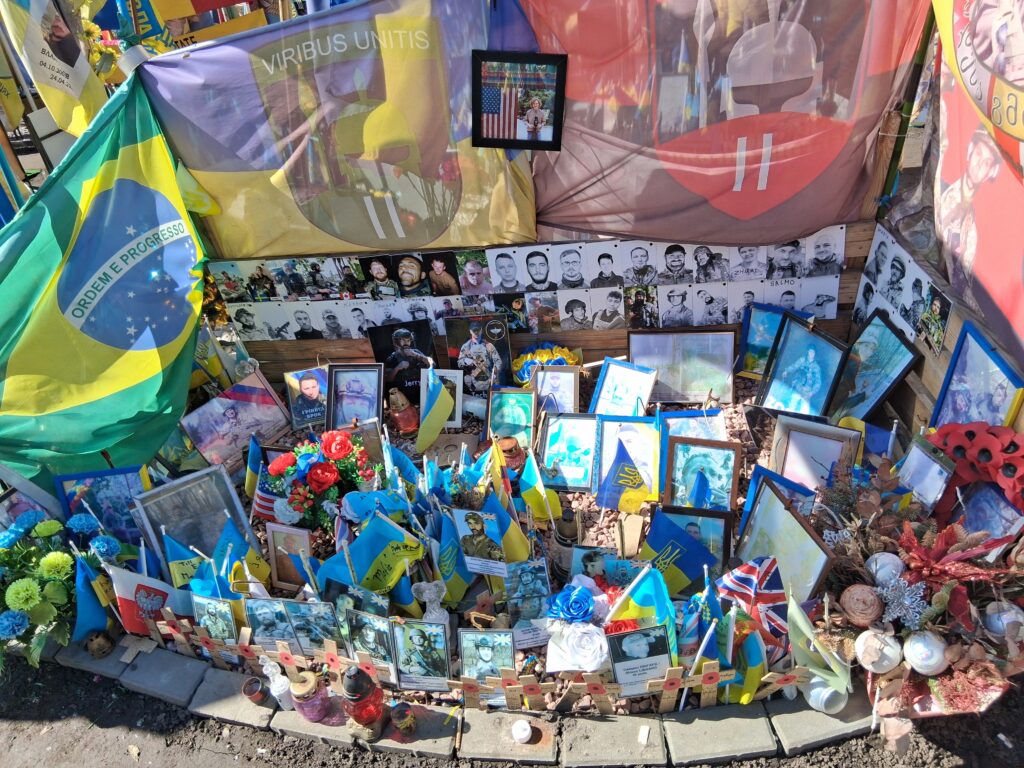
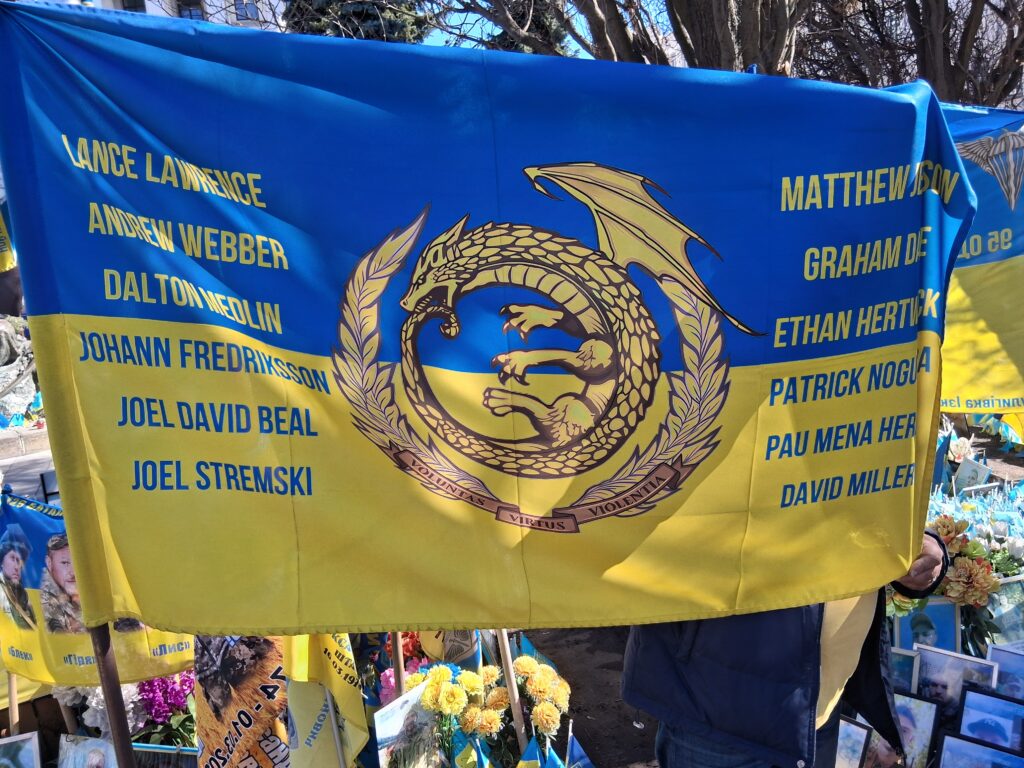
Elsewhere, I saw evidence of how war slowly reshapes an entire culture.
Uber is problematic in Ukraine. I couldn’t understand why I couldn’t get my app to work. Later I learned that GPS is jammed in most cities so Russian missiles and drones can’t use GPS to locate their targets. But only intermittently, so you never know if you might get service. I finally understood why the app kept insisting that no rides were presently available between Kyiv and Lima, Peru.
Midnite curfews transform nightlife. Young people gather by the hundreds outdoors in the freezing cold because there are no places for them to go.
Families are split apart across international borders and domestic front lines. The interpreter at my Dnipro screening told me how he had been there for ten years raising his two daughters alone because his wife was back home in Donetsk – occupied by Russians since 2014. She chose to leave her family in order to go back to support her elderly parents. Imagine facing a choice like that! Giving up your daughters to fulfill a filial obligation to your parents. Only 130 miles away, it’s impossible for them to communicate and he doesn’t know if he’ll ever see her again. He survives by teaching English 40 hours/week at local schools and colleges, and welcomes freelance gigs like mine in order to make enough money to support his daughters.
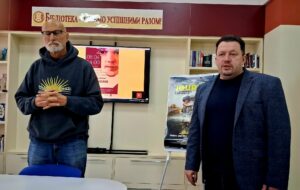
My Dnipro translator and me
Impossible choices are faced every day and made with all the wisdom available in that moment. Because daily life persists.
That persistence may be the most moving thing I witnessed.
Persistence without romanticizing, without pretense, without bravado. Just war – shitty, unfair, grinding endlessly on, totally fucked up. A grim fact of life.
None of the idealized nonsense that fills US screens. Americans imagine war only through explosions and destruction, storming front lines, heroics. But much of war is waiting. Adjusting. Adapting. Living inside uncertainty for so long that uncertainty itself becomes routine.
What I encountered in Ukraine was not a society frozen by fear. It was a society determined to continue being human, to assert life despite the fear.
My host at Odesa’s National Science Library told me that there may not be many people attending that day as the bombardments carried on through most of the night. Six civilians dead. Having heard the explosions from my hotel room I understood. I decided then to start things off sincerely, but lightly. When 40 highly motivated people showed up, some bleary eyed, I acknowledged last night’s horror, bowed in gratitude for their presence, then told them I took no offense if anyone nodded off during the screening.
 Yes, people still attend film screenings. They still ask profound questions. They still care about art, philosophy, spirituality, relationships, finding meaning and purpose. Again and again, audiences stayed long after events were scheduled to end because nobody wanted to stop listening and sharing.
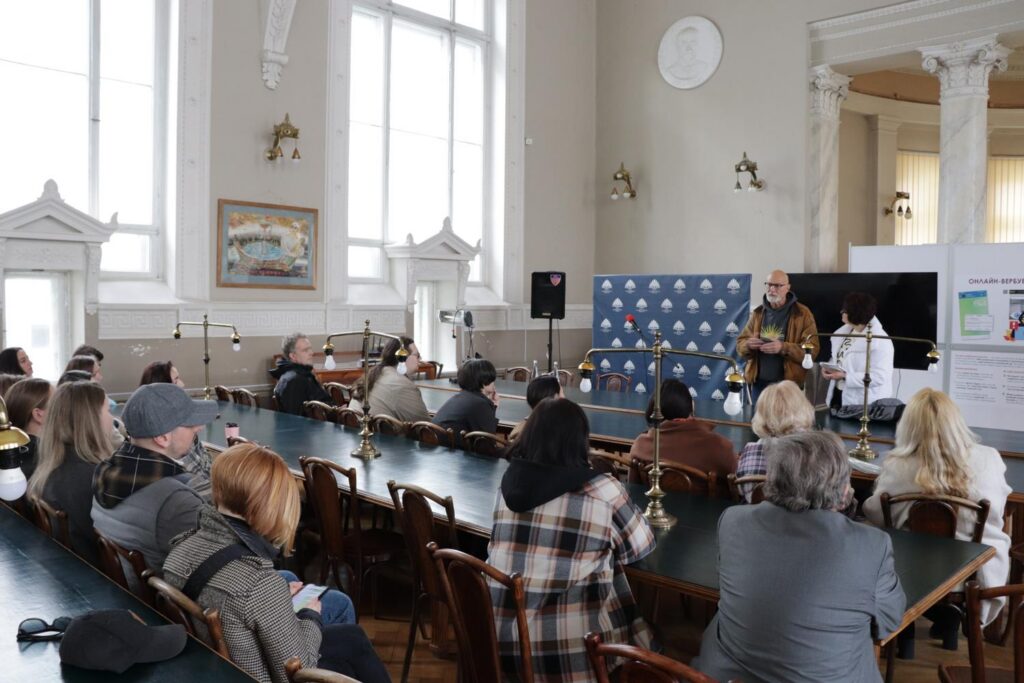
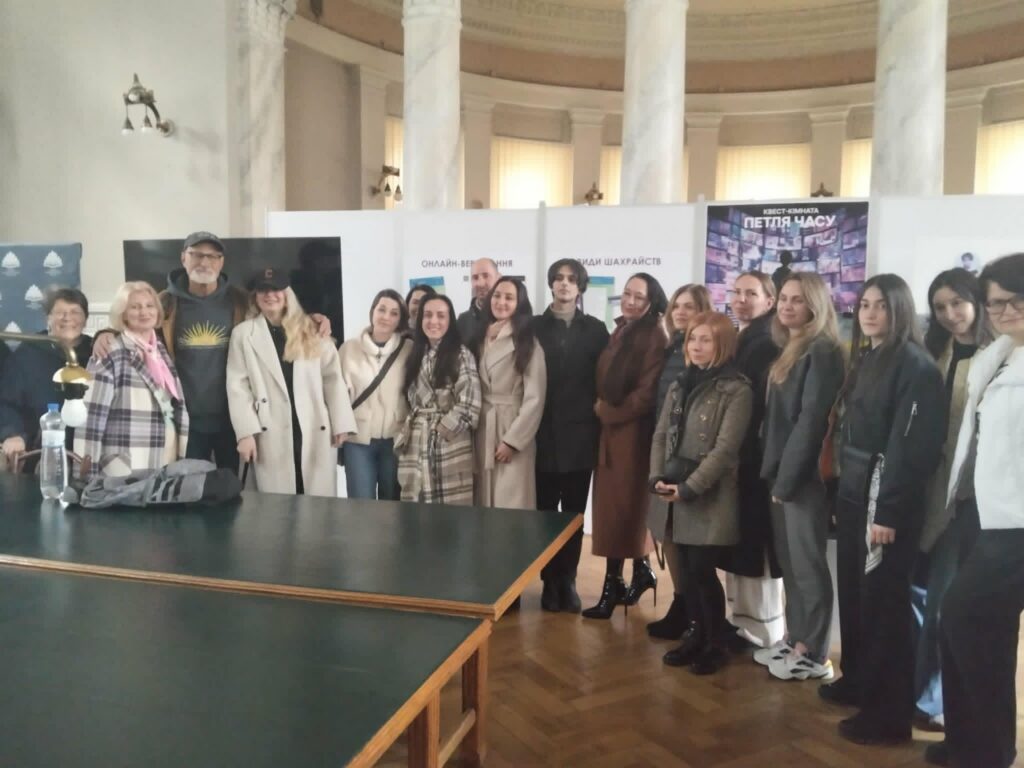 That may ultimately be what Russia can never destroy.
Not simply buildings or infrastructure, but the deeper civic and emotional life that built them.
Ukraine reminded me that culture itself is a form of resistance.
Conversation is resistance. Memory is resistance. Art is resistance. Human warmth is resistance.
And perhaps most importantly, continuing to live fully in the presence of danger is its own kind of courage.
My last night in Ukraine, in Kyiv, I awoke at 2:30 with sirens blaring. In my sleep fog I imagined these were louder, somehow more serious. I thought about waking Ben in the next room and heading together to the shelter off the courtyard. I couldn’t decide. Finally, I put in earplugs and rolled over. Within 3 minutes the missiles landed. Thunderous booms. I estimated maybe 1.5 miles away. The bombardment pounded on for 10-15 minutes. I thought, “Well, if I die I deserve it for being lazy.” The next day I learned the adjacent residential neighborhood was hit, four civilians dead, including a mother and her two young children.
By the end of the trip, I realized the deepest lesson Ukraine offers may not be about war at all.
It may be about the astonishing adaptability of ordinary people who can survive almost anything. They continue trying to love, create, laugh, argue, help strangers, raise families, and search for meaning even while history explodes around them.
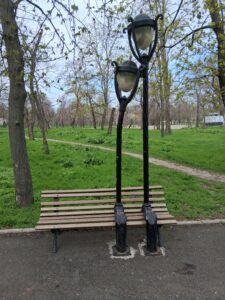
Light pole lovers on a bench in Odesa
That is present-day Ukrainian life.
Not endless heroism. Not endless tragedy.
Just humanity, making its quotidian way, persisting under extraordinary pressure.
[For the next blog in the Ukraine series, click here.]
To subscribe and receive all our blogs, film giveaways, public talks, and more, click here.